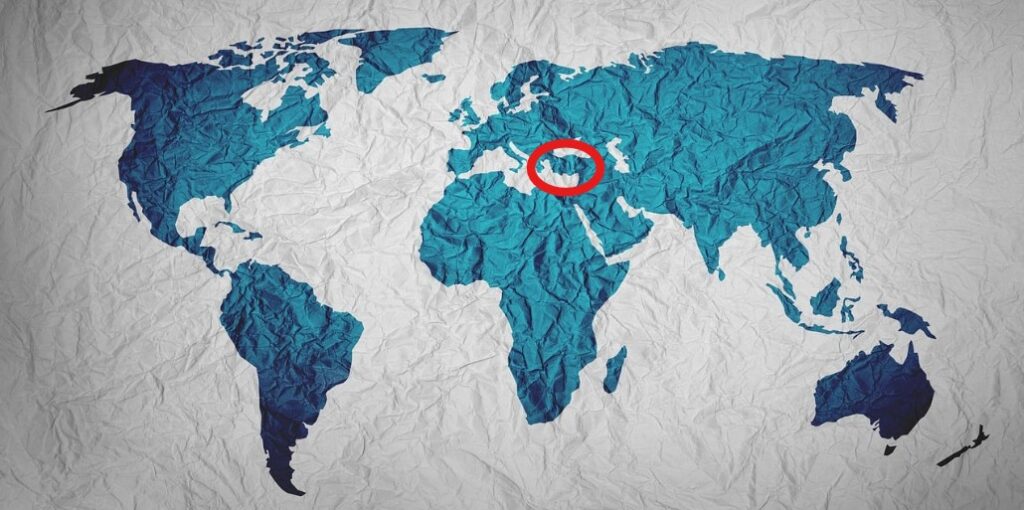
In Turkey, or the more correct Türkiye, millions of consumers have been attempting to juggle multiple credit cards, sky high interest rates and overwhelming debt repayments.
This isn’t a rare problem; it’s a country-wide social issue that affects households as well as the broader economy, like here in South Africa. Over the past decade Türkiye’s regulators and banks have tried several approaches to provide the over‑indebted consumers with some breathing room, while protecting the financial system.
There are options for big corporates and some interesting ones for consumers dealing with credit cards and loans.
Let’s look at some of them.
For Companies
Large companies in distress can apply for what is known as a concordat, a court‑supervised restructuring that involves detailed business plans, creditor meetings and judicial oversight.
They can also negotiate out‑of‑court deals under the financial sector restructuring scheme, established in Türkiye’s Banking Law. These tools are designed for complex corporate balance sheets, not for individual consumers.
For Consumers
Other than applying for bankruptcy, consumers can make use of restructuring of loans and credit cards.
This was first introduced in 2016 and has since been updated and transformed a few times over the years.
Basically, consumers are able to apply to their banks to limit their credit use, and stretch out debt repayments over more months (at a fairly low interest rate).
This entire restructuring process is not done through the courts, consumers deal directly with their bank.
2016
In September 2016 the Banking Regulation and Supervision Agency (BDDK) opened the door to longer repayment periods for both credit card and loans. Banks and the general public responded quickly, restructuring more than ₺52 billion in debts within a few months, thereby helping over one million borrowers. At the time, the extended repayment terms were relatively short: 23 months for credit cards and 37 months for loans.
2018
Two years later, the Banking Regulation and Supervision Agency (BDDK) capped the maximum repayment term for new loans at 36 months, while older loans were to be restructured for up to 48 months if borrowers applied before September 2019.
2024
With inflation high and consumers squeezed, regulators took things a step further in 2024.
In September 2024 the BDDK issued Decision 10972, allowing credit card holders who could not repay their minimum instalments, to restructure their entire balance for up to 60 months.
In simple terms, the bank takes your outstanding balance and splits it into 60 monthly instalments, each of which is added to your normal minimum repayment.
During that time consumers’ credit card limits cannot be increased until they have repaid half of the restructured debt. The same decision also allowed people with loans in arrears to also restructure for up to 60 months.
2025
Extended terms only really help if the interest rate is manageable. In July 2025 regulators capped the contractual interest rate on restructured credit card debts at the Central Bank’s reference rate (3.11 % per month at the time) and limited default interest to 5.30 %.
2026
The length of time these debts can be restructured over, could be shrinking down to 48 months this year.
You Still Get To Use The Accounts
Interestingly, in Türkiye your access to the account doesn’t disappear during the process. The account usually stays open, but your credit limit is effectively frozen until you’ve repaid half of the restructured amount.
That way, the bank gets to keep you as a client while you get things back on track, clever.
Finding Solutions to Crushing Consumer Debt
Around the world, governments, banks and consumers continue to look for practical solutions to over‑indebtedness.
After all, the banks need to get their money back, but consumers are demanding more realistic options.
Türkiye’s’ evolving credit card restructuring rules are an interesting example: they give borrowers longer to pay, but cap interest rates while keeping the process within the banking system rather than the courts. For many Turkish people, this process has been a real financial lifeline.
Be sure to check out our next issue as we explore another country’s approach to helping consumers manage their debts.
We use cookies (the computer type not the tasty ones) to ensure that we give you the best experience on our website. If you continue to use this site we will assume that you are happy with it.Yummy, Cookies... OKNo