South Africa’s payments system is set for a major shake up, and banks are not celebrating.
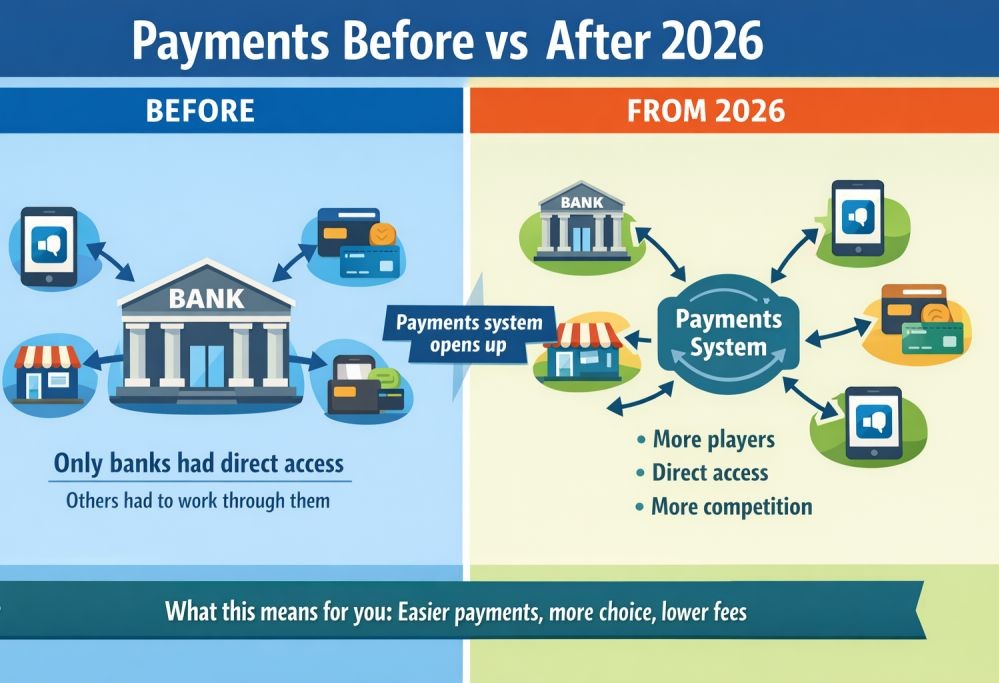
The South African Reserve Bank plans to open the National Payments System to companies that are not banks from 2026.
The system is the backbone that moves money between banks, shops, and consumers.
Until now, only licensed banks could connect directly, which meant fintech companies and mobile wallets had to work through them. This gave banks a powerful gatekeeper role, and that near monopoly is now probably going to disappear.
Why the Change?
The Reserve Bank says the goal is not to get rid of cash, but to give people more choice in how they pay.
Some say that payments should be as easy as sending a text message. Fintech companies argue that many South Africans already use mobile phones daily but do not have easy access to bank branches. Allowing non-banks direct access to the payments system could expand real time payments and services like PayShap.
‘it …removes banks’ control over who can offer these services and at what cost’
While this could help bring more people into the formal financial system, it also removes banks’ control over who can offer these services and at what cost.
More competition usually means lower fees and better products, which explains why banks are uneasy.
Big banks like Absa, FNB, Nedbank, and Standard Bank have already faced pressure from newer digital banks.
If non-banks can connect directly, large brands such as MTN and Shoprite could offer payment and money-holding services without relying on a bank partner.
For consumers, this could mean more choice and lower costs. For banks, it means sharing a space they once controlled.
We use cookies (the computer type not the tasty ones) to ensure that we give you the best experience on our website. If you continue to use this site we will assume that you are happy with it.Yummy, Cookies... OKNo