By the time people enter debt review, they have already fallen into the bad habit of missing payments to their credit providers.
This usually does not happen overnight; it often starts with one missed payment, then another, until things slowly begin to unravel.
Missing payments is a breach of your credit agreement. Once this happens, credit providers are legally allowed to start taking action against you, for exampl,e repossessing assets such as cars or homes, or applying for court judgments. These judgments can last for up to 30 years and give credit providers the right to recover money from you for decades.
This problem is more common than many people realise. Nearly 40% of South Africans who use credit have already skipped 3 months payments.
‘40% of South Africans who use credit have already skipped 3 months payments’
Breaking this cycle is difficult, especially when money is tight and stress levels are high.
Missing payments also tosses consumers into the collections process. This often includes frightening phone calls, constant SMS messages, threatening letters, and sometimes even home visits or court summonses. It is unpleasant and emotionally exhausting.
The good news is that entering debt review is designed to put an end to this chaos, and restore order.
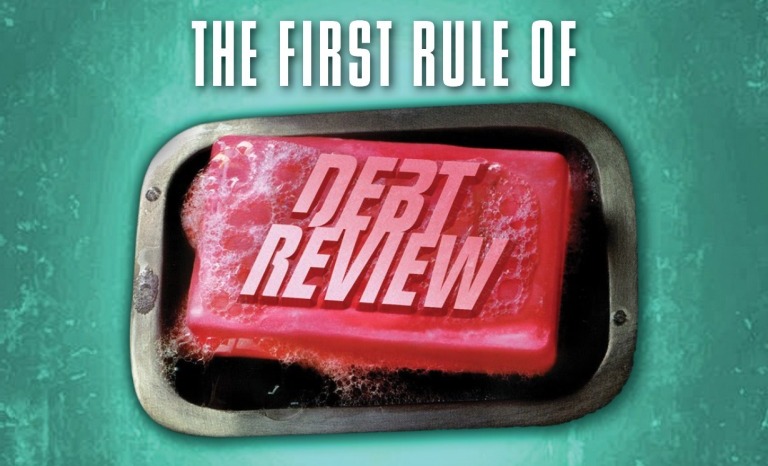
The Number One Rule of Debt Review
So, what is the number one rule of debt review?
It is very simple.
Never miss a payment!
Once you enter debt review, you need to leave the bad habits behind. Your entire financial life must be arranged around one priority: making sure that your debt review payment is made in full, on time and every single month.
This is especially important because your credit providers are cooperating with you. In most cases, they have agreed to reduce interest rates, remove certain fees, or make other concessions to help make an affordable and sustainable repayment plan.
They are cooperating with the process; the question is, are you?
As long as you keep making your debt review payments, you can enjoy the protection and benefits of debt restructuring. Even if credit providers complain or are unhappy, it is extremely difficult for them to convince a court to cancel a valid debt review arrangement when payments are being made as agreed.
Debt review offers real and powerful protection, but only if you stick to the rules.
What to Expect if You Do Miss a Payment
Missing a payment is serious.
Your debt repayment amount is not just a casual arrangement. It is based on negotiations between your credit providers and your debt counsellor, and it is confirmed through a legally binding court order.
If you break that court order, you are effectively throwing away all the progress you have made. This could happen after just one month in debt review, or even after four years of disciplined payments. Everything can be undone in a single moment.
In fact, the longer you have been in debt review, the more dangerous a missed payment can be. Credit providers may revert your accounts back to the original contract terms, removing all interest rate reductions and fee concessions. This can result in much higher balances and larger amounts being demanded immediately.
They are also no longer required to accept reduced monthly payments. They may demand full settlement immediately or apply to court for a judgment. If you fail to stick to the court-ordered debt restructuring plan, credit providers are within their rights to start new and often expensive legal action, which they may ask the court to make you pay for.
This is why the rule remains simple.
Nevermiss a payment.
What Happens if You Short Pay?
What if you run into trouble and only pay part of your debt review amount for the month?
Many people assume that short paying is not a big issue and that it is much better than missing a payment entirely. In a sense, this is true. It does show that you are at least trying to honour the arrangement.
However, short payments can still cause problems. In many cases, the reduced amount is automatically spread across all credit providers. This can be particularly risky for important accounts such as home loans or vehicle finance, which may require prioritisation. Your debt counsellor can sometimes assist with this, but it is not ideal.
Short payments may also give credit providers a legitimate reason to argue that you are not sticking to the agreement. This can weaken your position and, in some cases, encourage them to try to exit the debt review process.
In certain situations, it may be possible to make an arrangement in advance to short pay and then catch up later. This must always be done openly and with the help of your Debt Counsellor.
Form 17.3 and Catching Up
If a missed payment is truly unavoidable and you have valid proof, you may be able to ask for temporary relief from your credit providers.
This process is handled by your debt counsellor and usually involves an official letter, commonly referred to as a Form 17.3. The letter explains the situation, provides proof, and asks the credit providers to be understanding, even though the court order has technically been breached.
It is important to understand that this relief is not guaranteed.
‘It is important to understand that this relief is not guaranteed’
When credit providers consider such a request, they will ask tough questions.
Could the situation have been avoided?
Was the problem caused by a poor financial decision, such as paying a family member’s debt instead of your own?
Did you choose not to pay because you wanted to go on holiday or spend money elsewhere?
They will also look closely at timing. Letting credit providers know weeks after a payment has been missed, is a serious mistake and can cause significant problems. Communication must happen in advance, not after the damage is done.
If they believe your explanation and are willing to assist, they may agree to a temporary arrangement and expect you to catch up later, if it is practical. However, they are not obliged to agree. They may still choose to exit the debt review and start new legal action against you.
How to Avoid Missing a Payment
There are practical steps you can take to reduce the risk of missing a payment.
Stick closely to your budget and track your spending carefully rather than guessing. Make adjustments early, as soon as you see that money is getting tight.
Build an emergency fund and protect it. This money should be used only for real emergencies, not for impulse spending or non-essential expenses.
Make sure you have appropriate insurance in place on your credit agreements, especially for retrenchment or loss of income.
Most importantly, if you see trouble brewing, such as possible medical treatment or retrenchments at work, speak to your debt counsellor immediately. Early communication can make all the difference.
Never Miss a Payment
Debt review and debt restructuring are powerful tools. They bring relief, reduce stress, and make repayment realistic and manageable. However, the process is delicate.
Missing a payment sends a message to credit providers and the courts that you are not committed to the plan. This opens the door for new legal action, court judgments, and even the loss of assets.
Do not let years of progress be for nothing. Save for emergencies, stay disciplined, and keep lines of communication with your debt counsellor open, especially when problems arise.
If payments are missed or short paid and credit providers lose confidence, it can mean the end of your debt review and everything you have worked toward.
We use cookies (the computer type not the tasty ones) to ensure that we give you the best experience on our website. If you continue to use this site we will assume that you are happy with it.Yummy, Cookies... OKNo