Sometimes people get into debt because life changes.
They may lose a job, face unexpected expenses or use all their existing credit just to survive.
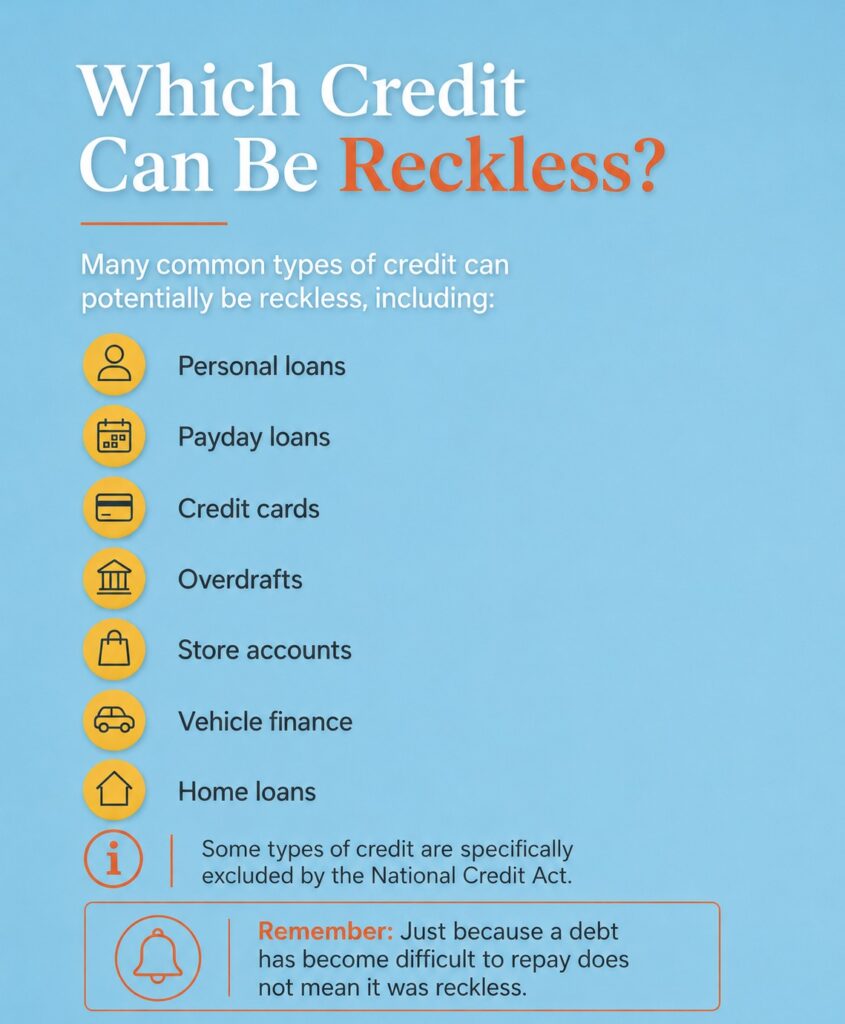
In such cases, it suddenly gets very hard to pay all your existing debts to all your credit providers. That is hard, but it does not mean the credit was granted recklessly.
Reckless credit is something different and is explained in the National Credit Act.
It is essentially credit that should never have been granted to a consumer in the first place.
Let’s have a deeper look at what it is, and what can be done if discovered.
What Makes Credit Reckless?
Credit given to consumers who should not get it, or cannot realistically be expected to repay it, is reckless.
This is illegal under the National Credit Act, and credit providers could face big fines and loss of their funds if caught.
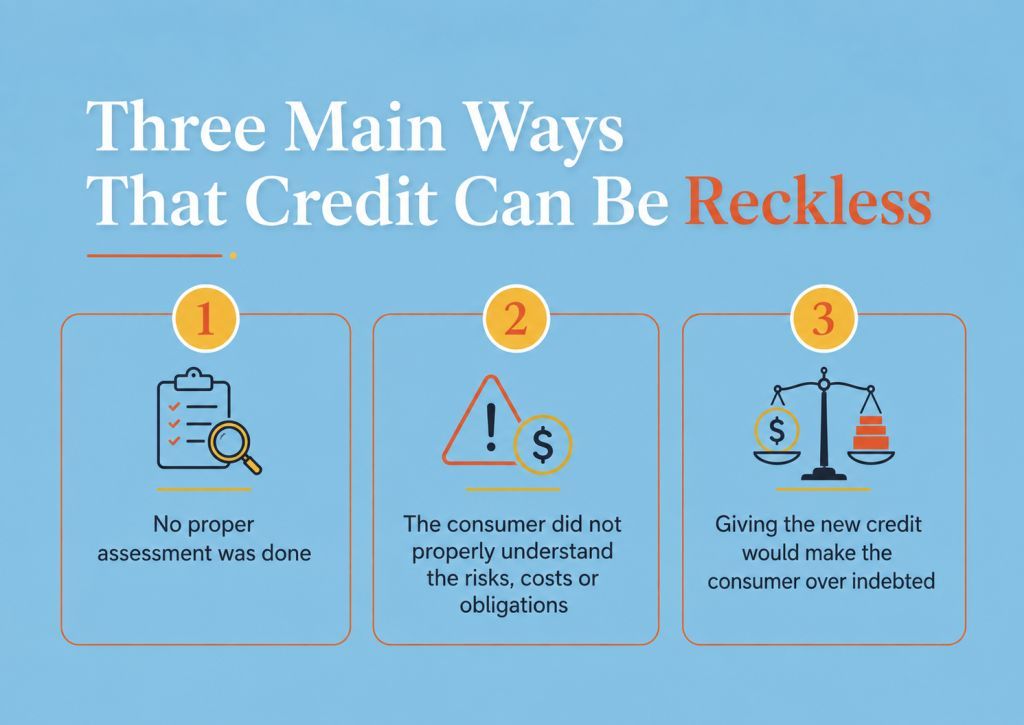
There are three main ways that credit can be reckless:
No proper assessment was done
The consumer did not properly understand the risks, costs or obligations
Giving the new credit would make the consumer over indebted
Think of an overloaded bakkie. If the suspension is already touching the tyres, you probably should not put another fridge on the back. Credit works the same way.
Responsibility Works Both Ways
Consumers who want to borrow money have a responsibility when making an application.
They should provide accurate information, think carefully before borrowing and understand what they are signing.
Credit providers also have responsibilities when deciding if they are going to give someone credit.
They have access to credit reports, bank statements, salary information and affordability systems. They are the financial professionals in the deal.
If a consumer says one thing, but their bank statements clearly show something different, the credit provider should take note and act accordingly.
The balance is simple:
Consumers should borrow responsibly
Credit providers should lend responsibly
Sometimes responsible lending means saying no.
Finding Reckless Credit During Debt Review
Debt review gives the Debt Counsellor a very good look at a consumer’s complete financial picture.
Sometimes something stands out during that deep dive (the debt review part). E.g. several loans were granted in a short period of time, or the consumer had almost nothing left after all their deductions, maybe there were lots of payday loans one after the other. These are red flags!
When applying for debt review, a consumer can ask the Debt Counsellor to investigate a particular credit agreement.
The Debt Counsellor may also spot something wonky and ask: “Would you like us to look into this?” but the decision currently sits with the consumer to initiate an investigation, as additional fees may apply (normally R1500).
The results of an investigation will end up being included in court documents, and a Magistrate can rule what happens next.
Let’s Make a Deal
Not every reckless credit matter results in a Judge or Magistrate making a ruling.
Sometimes an investigation raises uncomfortable questions for the credit provider. That can motivate them to be super friendly and the parties may then make a deal.
Interest or fees might be removed; the balance might be reduced; better repayment terms might be agreed.
Sometimes debt may even be written off.
Credit providers may prefer to do this, because a negative court finding can raise bigger questions about how they grant all their credit. It can even make its way into the press or to shareholders. This can affect their reputation and, for larger businesses, investor confidence.
One small account can lead to a much bigger question: “How many other loans were granted like this?”
What Can A Court Do?
The Debt Counsellor does not decide that credit is reckless.
The matter can be placed before a court, with the Magistrate getting to decide what happens.
These are the two possible outcomes:
Set It Aside
A court may, depending on the circumstances, set aside some or all of the consumer’s obligations resulting in some or all of the debt disappearing.
Make It Wait
A court may instead suspend the agreement till later after other debts are sorted out. Finding reckless credit does not always mean the debt disappears. Sometimes payments just have to wait.
What Does Reckless Credit Look Like?
One example of credit a consumer should never have been granted is of an elderly couple who had a bond on their home.
They were very close to retirement age (when they would no longer have salaries to pay lots of money each month) but went to borrow more money.
When the bank decided to grant new credit amounting to hundreds of thousands of rands to these consumers, they seems to have forgotten that old people stop working (retire) and then would not be able to continue those payments. It would be unrealistic, knowing the consumers age and situation to grant them so much credit.
The Debt Counsellor and credit provider negotiated and decided to reduce the overall debt the consumers would repay to just their monthly debt repayments until retirement, and then to write off the rest of the debts and fees.
In another case, a consumer entered debt review because they had so many loans and no money available to cover expenses each month. They had been getting loan on top of loan all from the same 2 credit providers. The credit providers had given them so many loans at the same time that out of their whole salary they had less than R100 left at the end of the month.
In another example, a consumer earned around R34 000 a month, but had so many loans that after the credit providers took their payments from his salary, he was left with only R1500.
Sometimes credit providers will even ignore a debt review flag on a consumer’s credit report and decide to grant them new credit (while they are still in debt review).
There Is Still Lots of Reckless Credit Out There
Though the law about reckless lending and conducting proper credit assessments was introduced many years ago, Debt Counsellors are still finding lots of reckless credit.
In many cases credit is still granted where no proper assessments were done; where the consumers did not really understand the credit obligations (perhaps signing contracts in languages they can’t read) or where the new credit ended up making the consumer over indebted.
If you are starting debt review and think one of your credit agreements may have been reckless, you can ask your Debt Counsellor to look into it. If the investigation finds a problem, the matter can be reported to the court.
They can then decide what should happen. As a result, it might be set aside or the credit provider may have to wait for their payments until the other debts are sorted out.
But it is important to realise that reckless credit is not a magic way to escape debt. It is a legitimate protection against credit that should never have been granted.
We use cookies (the computer type not the tasty ones) to ensure that we give you the best experience on our website. If you continue to use this site we will assume that you are happy with it.Yummy, Cookies... OKNo